
Pelvic Floor Therapy vs Emsella: Which Approach May Be Right for You?

If you're experiencing leakage, bladder control concerns, pelvic pain, weakness, or other changes in your pelvic health, you may be wondering where to start. Should you work with a pelvic floor physical therapist? Would Emsella be a better fit? Or could a combination of approaches make sense?
These are common questions, especially for women who have started researching pelvic floor issues and want to understand their options before scheduling an appointment.
There isn't one right answer for everyone. A weakened pelvic floor can have different causes, and the right treatment depends on your symptoms, goals, muscle function, lifestyle, and overall health.
Two approaches that women may encounter are professional pelvic floor therapy and Emsella, a technology-assisted treatment designed to stimulate the pelvic floor muscles. Understanding how each works can help you have a more informed conversation with a qualified provider.
What Is Pelvic Floor Physical Therapy?
Pelvic floor physical therapy is a specialized form of physical therapy focused on the muscles and tissues that support the bladder, bowel, reproductive organs, and pelvic region.
A provider may evaluate muscle strength, coordination, tension, movement patterns, and how the pelvic floor muscle works with the core and surrounding structures.
Depending on the individual's needs, treatment may involve exercises, movement education, breathing techniques, manual therapy, biofeedback, and other individualized strategies.
For women searching how to strengthen the pelvic floor, the appointment experience may involve a detailed discussion of symptoms followed by a physical assessment, depending on the provider and type of care offered.
The goal is not simply to perform Kegels. A therapist may help you understand whether you need to improve muscle strength, coordination, relaxation, or awareness of the right muscles.
What Happens During Pelvic Floor Therapy?
A pelvic floor therapy appointment can vary depending on your symptoms and provider.
Your first visit may include questions about bladder or bowel habits, exercise, childbirth history, pain, sexual function, and other pelvic health concerns. Your provider may then assess movement, muscle function, and other factors contributing to your symptoms.
Treatment can include traditional pelvic floor exercises, core exercises, breathing, stretching, strengthening, or other techniques.
For some women, therapy may also address pelvic pain, muscle tension, or pelvic floor weakness or dysfunction. Others may be referred for additional evaluation if symptoms suggest a condition such as pelvic organ prolapse.
Pelvic floor physical therapy can be particularly useful when someone needs hands-on assessment, individualized exercise instruction, or help learning how to coordinate a pelvic area contraction correctly.
What Is the Emsella Chair and How Does it Strengthen Your Pelvic Floor?
Emsella is a technology-assisted treatment designed to stimulate the pelvic floor muscles through high-intensity focused electromagnetic energy.
During an Emsella treatment, you sit on a specialized chair while remaining fully clothed. The device delivers electromagnetic energy to the pelvic region, creating repeated muscle contractions.
In simple terms, Emsella is a treatment that uses high-intensity electromagnetic stimulation (HIFEM technology) to create contractions of your pelvic floor muscles without requiring you to perform each contraction yourself.
This is one reason Emsella is sometimes described as a pelvic floor strengthening treatment or a technology-based approach to pelvic muscle stimulation.
Emsella offers electromagnetic energy to produce what are sometimes described as supramaximal contractions, meaning the treatment is designed to create a high level of muscle stimulation.
What Does an Emsella Treatment Feel Like?
One of the most appealing aspects of Emsella for many women is the convenience.
You remain fully clothed throughout the treatment and sit comfortably on a specialized chair. There is no surgical incision and no need to change into a gown to strengthen your pelvic floor.
Treatment time can vary, but many protocols involve sitting in the Emsella chair for 30 minutes.
During the session, you may feel your pelvic muscles contracting as the electromagnetic stimulation works. The sensation can be unusual at first, but the intensity can generally be adjusted based on the treatment protocol and individual comfort.
Because there is little interruption to a person's schedule, Emsella may be appealing to women looking for a convenient non-invasive treatment option.
Understanding Emsella vs Pelvic Floor Therapy: What's the Difference?
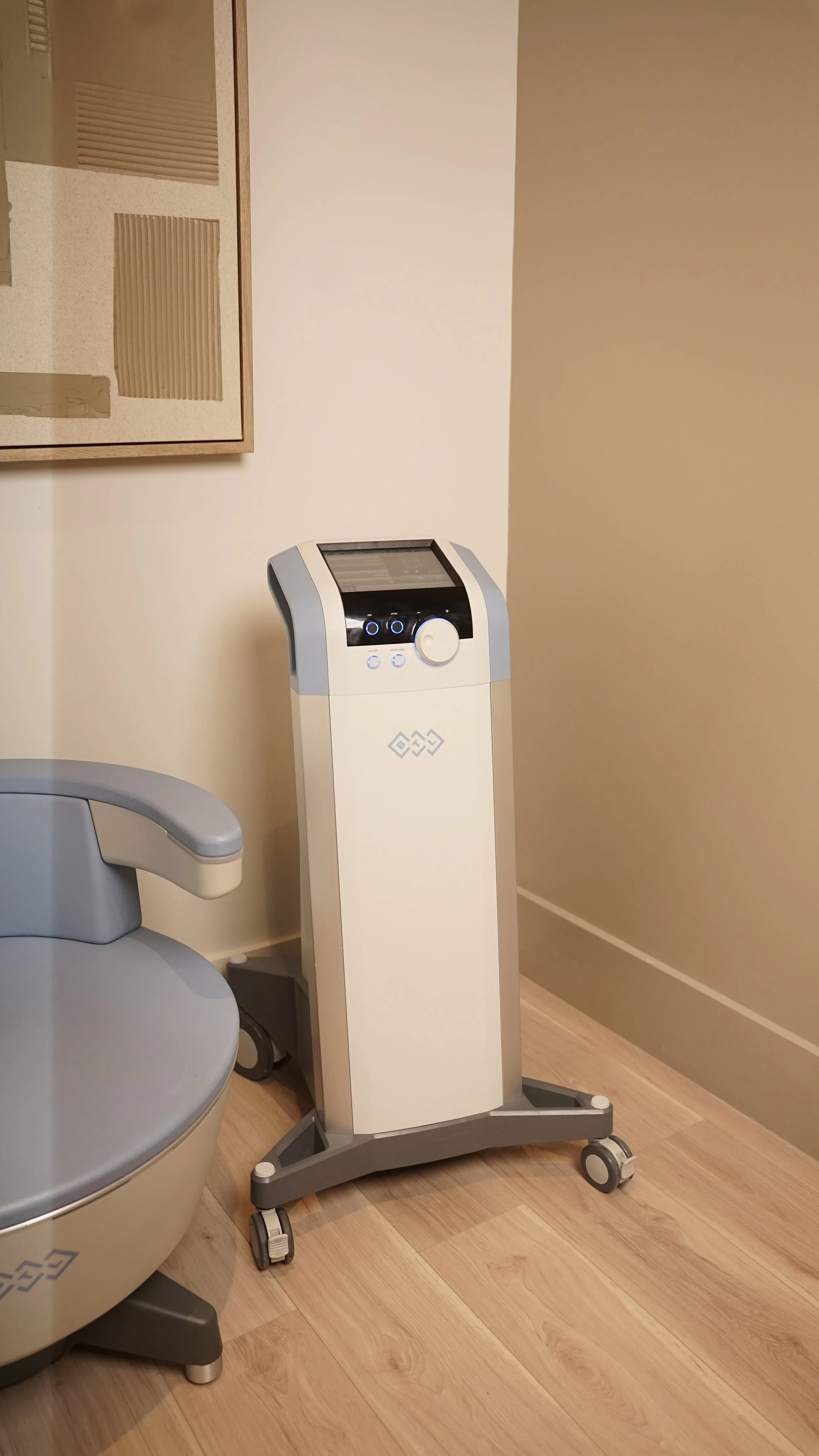
The biggest difference is the way each approach works.
Pelvic floor therapy is an active, individualized approach. You work with a professional to understand your muscles, movement patterns, and symptoms. You may learn Kegels, relaxation techniques, strengthening exercises, and other strategies to help improve pelvic floor function.
Emsella is a technology-assisted approach. Instead of relying entirely on voluntary contractions, Emsella uses high-intensity focused electromagnetic stimulation to create repeated pelvic floor muscle contractions.
This doesn't necessarily mean one is better than the other.
For some women, learning proper technique and improving awareness through therapy may be the right treatment. For others, Emsella may be an appealing option for pelvic floor stimulation. In some cases, a clinician may recommend combining approaches or using them in stages.
Benefits of Emsella for Urinary Incontinence
One reason women research Emsella for urinary concerns is bladder leakage or stress urinary incontinence.
Pelvic floor muscles play an important role in bladder control, so changes in muscle strength or coordination can contribute to incontinence symptoms and leakage.
Emsella may be considered as part of a treatment plan for women experiencing these concerns, but it is important to understand that symptoms can have different causes.
Some women may benefit from pelvic floor physical therapy, while others may be appropriate candidates for Emsella or another treatment for incontinence.
A consultation can help determine which approach may be appropriate rather than assuming every woman needs the same treatment.
Emsella Chair Results: What Should You Expect?
If you're researching Emsella results women and looking for before-and-after stories online, it is important to approach results realistically.
Individual results may vary. Factors such as muscle strength, symptoms, health history, treatment consistency, and the underlying cause of a pelvic health concern can all influence someone's experience.
The goal of Emsella is to provide pelvic floor stimulation and support pelvic floor strength. It may be one part of a broader plan designed to address pelvic health concerns.
There are no guaranteed outcomes, and Emsella should not be presented as a replacement for individualized medical evaluation.
Emsella vs Pelvic Floor Therapy: Can You Combine Them for Pelvic Floor Strengthening?
Sometimes the question isn't Emsella vs pelvic floor therapy.
Depending on the individual's needs, a clinician may recommend a combined or staged approach.
For example, someone may benefit from pelvic floor therapy to learn proper muscle engagement and movement patterns while also using Emsella as an additional form of pelvic floor stimulation.
Another woman may begin with therapy and later explore Emsella, while someone else may be an appropriate candidate for Emsella without requiring traditional physical therapy.
This is why an individualized approach to pelvic floor health matters. Your provider can consider your symptoms, goals, and current muscle function before recommending a treatment plan.
Treatment for Pelvic Floor Cost: What Should You Consider?
Another important consideration is pelvic floor treatment cost.

The cost of care can vary significantly depending on the type of treatment, number of appointments or therapy sessions, provider, location, and whether you are receiving physical therapy, Emsella, or a combination of services.
Rather than choosing an option based on price alone, consider what type of evaluation and care you need.
Ask what is included in the treatment, how many visits may be recommended, and whether additional services could be necessary.
The goal should be finding the right treatment for your individual needs—not simply choosing the least expensive option.
How Do You Know Which Non-Invasive Option May Be Right for You?

Consider pelvic floor therapy if you want:
An individualized assessment of your pelvic muscles
Help learning proper pelvic floor exercises
Guidance with muscle coordination and technique
Support for pelvic pain or muscle tension
A personalized exercise program
Help understanding how your core and pelvic floor work together
Emsella may be worth discussing if you want:
A technology-assisted treatment
A convenient appointment experience
Pelvic floor stimulation without changing clothes
An option that uses electromagnetic energy
An alternative or complement to traditional pelvic floor exercises
For some women, neither approach should be viewed as an either-or decision.
Exploring Your Pelvic Floor Treatment Options in Arlington
If you're comparing Emsella vs pelvic floor therapy or kegel exercises, the best next step may be a private consultation where you can discuss your symptoms and goals.
At Revique Medical & Aesthetics, we offer women an opportunity to learn more about their pelvic health, understand available treatment options, and determine whether Emsella may be appropriate for their individual needs.
Whether you're researching Emsella pelvic floor treatments, traditional therapy, or other approaches to pelvic floor strengthening, you don't have to figure it out alone.
A consultation can help you understand the differences between Emsella therapy, pelvic floor physical therapy, and other options so you can make an informed decision.
Ready to learn more? Contact Revique Medical & Aesthetics in Arlington, TX to schedule a private consultation and discuss which approach may be right for you.
Your symptoms, goals, quality of life and health history matter—and your treatment plan should reflect that.
